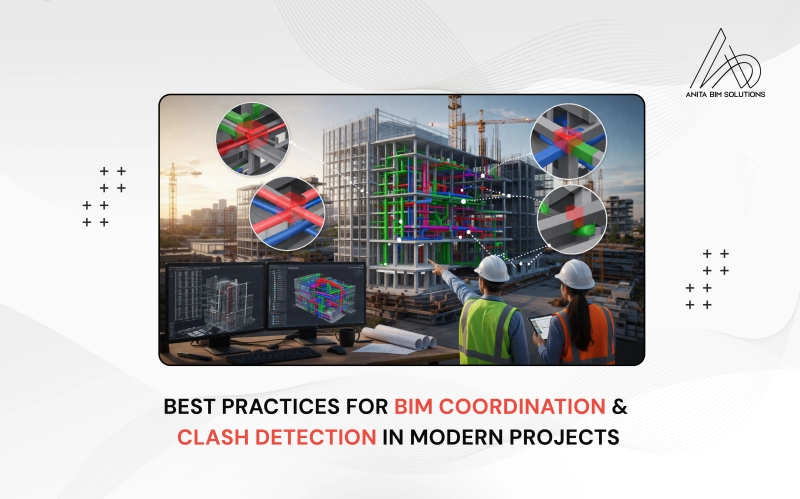
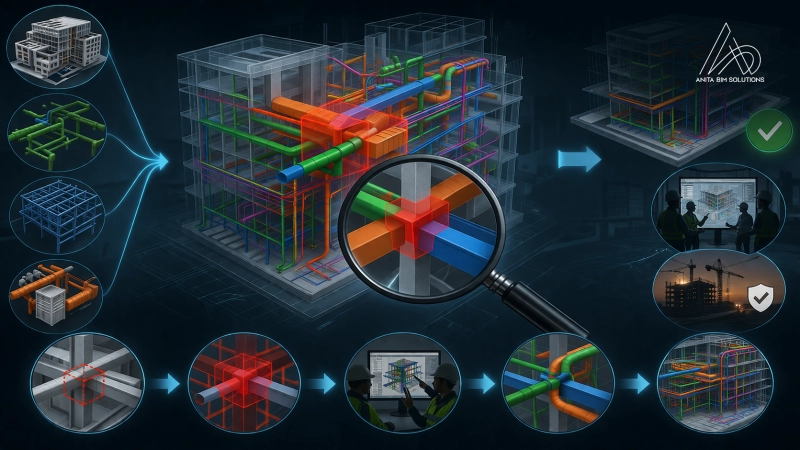
BIM coordination is the process of combining models from different disciplines into a single coordinated environment. This allows teams to review how architectural, structural, and MEP elements interact within the same space.
Instead of working in isolation, each team contributes to a shared understanding of the project. This helps avoid conflicts such as ducts passing through beams or pipes clashing with walls.
Effective coordination improves communication, ensures design consistency, and supports better decision-making throughout the project lifecycle.
Clash detection is a key part of BIM coordination. It involves identifying conflicts between different building elements within the model.
These clashes can be grouped into three main types:
By identifying these issues early in the design stage, teams can resolve them before they impact construction.
Several BIM tools are widely used to support coordination and clash detection processes:
These tools help teams visualize conflicts, assign responsibilities, and track issue resolution efficiently.
Define standards at the beginning of the project through a BIM Execution Plan. This should include naming conventions, file formats, model structure, and coordination procedures. Clear standards ensure that all teams follow a consistent approach.
A centralized platform allows all stakeholders to access the latest models and information. This reduces confusion and ensures that everyone is working with updated data. A common data environment improves transparency and collaboration across teams.
Coordination is an ongoing process. Regular meetings help teams review models, discuss issues, and make decisions quickly. These meetings also improve communication between disciplines and reduce misunderstandings.
Clash detection should not be a one-time activity. It must be carried out at different stages of the project to identify issues early and track progress. Early detection leads to faster resolution and avoids costly rework during construction.
Not all clashes have the same impact. Teams should classify and prioritize issues based on severity and project impact. Assign responsibilities clearly and track each issue until it is resolved.
Well organized models improve coordination efficiency. Remove unnecessary elements, maintain proper naming, and ensure model accuracy. Clean models make clash detection faster and more reliable.
Coordination is not just about tools; it is about teamwork. Open communication between disciplines helps resolve issues faster and improves overall project quality. A collaborative approach ensures that all teams work towards a common goal.
Regular model reviews are essential for maintaining quality and accuracy. Some effective techniques include:
These reviews help identify both geometric and data-related issues.
BIM coordination and clash detection are essential for managing modern construction projects. By combining models, identifying conflicts early, and following structured workflows, teams can significantly improve project efficiency and reduce risks.
Success in BIM coordination depends on clear standards, consistent model review, and strong collaboration between disciplines. When you follow these practices, BIM becomes a powerful tool that supports accurate design, smooth construction, and successful project outcomes.
For students and professionals looking to build expertise in BIM coordination and tools like Navisworks, gaining practical knowledge is important. Understanding real project workflows and learning how to resolve clashes effectively can make a significant difference in career growth. Anita BIM Solutions is one of the leading institutes in Kochi that offers industry-focused training in BIM coordination and Navisworks, providing hands on experience and practical exposure to real project scenarios, helping learners confidently step into the BIM industry.